

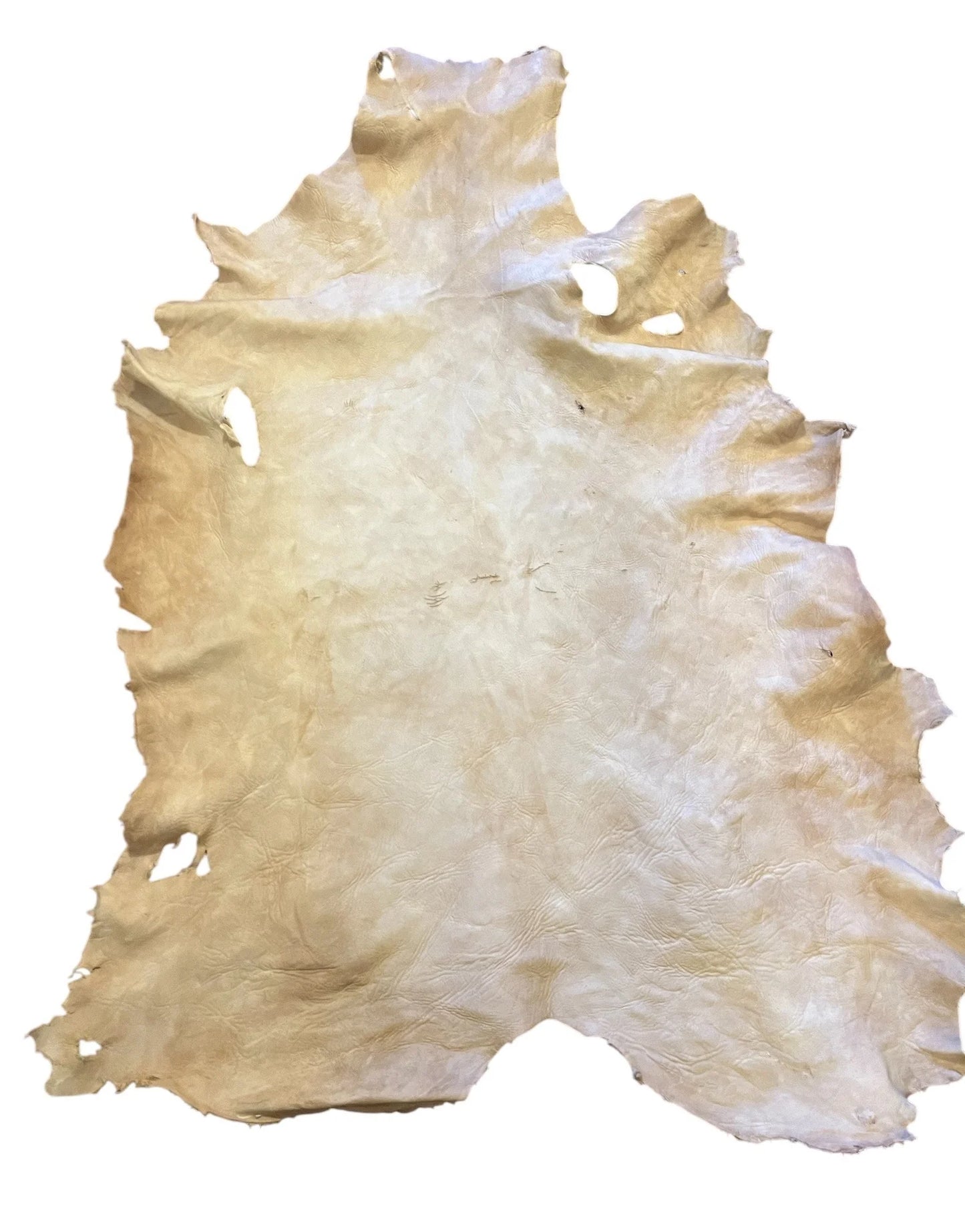
Natural Bark-Tanned Whitetail Deerskin Hide
Natural Bark-Tanned Whitetail Deerskin Hide
- Wild Harvested - MN/WI Hunters
- Small Batch - Seasonal Supply
- Made in the USA
Natural-tanned whitetail deerskin by our partner in Argyle, Wisconsin using a high-touch bark tanning method. Finished hides have a warm earthy scent and natural coloration that varies between warm tan to honey brown.
2–3 oz weight, averaging 10–12 sq ft per hide. Firm enough to wet-mold and hold shape, with the fine natural grain and clean edge burnish prized for sheaths, wallets, and tooled leatherwork.
Field marks, small holes, and natural variation are present on most hides and are normal for wild game leather. Note: You will receive a hide similar to what is pictured
Couldn't load pickup availability
Product Specifications
Product Specifications
Weight / thickness: 2.5–3.5 oz (1.0–1.4 mm)
Average size: 8–12 sq ft
Tannage: Vegetable (mimosa bark)
Temper: Medium-firm; supple with structure
Finish: Natural / undyed, ready for your own dye or finish
Stretch: Moderate
Sewability: Hand and machine
Origin: Wild whitetail - MN & WI
Tannery: Driftless Tannery in Argyle, WI
Material Origin
Material Origin
All hides are sourced directly from Deer's Meat Locker in Deer Park, WI - a family-owned wild game processing facility serving the Midwest since 1952.
Shipping Policy
Shipping Policy
Ships within 3 business days. Call ahead for bulk orders.
Share
Who uses our hides:
-
Traditional leatherworkers
Brain-tan style pliability from both chrome-tanned and natural-tanned varieties
-
Garment crafters
Shirts, vests, and fringe work where hand-sewability and drape matter
-
Moccasin makers
Lightweight grain and natural stretch for uppers and soft-soled construction
-
Drum builders
Consistent thickness and natural tension for frame drum heads
-
Primitive skill instructors
Authentic wild-harvested material for traditional joinery and lashing
-
Native American craft artists
Traceable, undyed, naturally processed hides for regalia and ceremonial work
Common Questions
What is the difference between bark-tanned and chrome-tanned deerskin?
Bark-tanned (vegetable-tanned) deerskin is tanned using natural plant tannins from tree bark over a process of four to eight weeks. Chrome-tanned deerskin is processed in hours using chromium salts. The resulting leathers are fundamentally different: bark-tanned deer has more body and structure, develops a patina over time, accepts tooling and wet-molding, and uses no synthetic chemicals. Chrome-tanned deer is softer, more water-resistant, holds vibrant dye colors, and costs less, but it cannot be tooled, won't develop a patina, and involves chromium-based chemistry.
What is bark-tanned deerskin used for?
Bark-tanned deerskin is especially favored for leather projects that require suppleness and structure. Common uses include wallets, journal covers, knife sheaths, wet-molded cases, tooled and stamped leatherwork, moccasins, traditional archery accessories, decorative accent pieces, and small leather goods. Its fine grain and lighter weight compared to cowhide make it especially well suited for detailed handcraft and heritage projects.
Does bark-tanned leather develop a patina?
Yes. Bark-tanned leather develops a rich patina over time as the plant tannins react with sunlight, natural skin oils, and the friction of regular use. The leather darkens, develops warm undertones, and burnishes at high-contact points. Each piece ages uniquely based on how it is used and handled. This patina development is one of the primary differentiators over chrome-tanned alternatives, which remain largely unchanged in appearance over time.
Can you tool or stamp bark-tanned deerskin?
Yes. Bark-tanned deerskin accepts tooling, stamping, carving, and wet-molding whereas chrome-tanned leather cannot. The vegetable tanning process produces a fiber structure that holds impressions cleanly when the leather is cased (dampened). Bark-tanned deerskin also burnishes at the edges without requiring edge paint, making it preferred by leatherworkers who want a natural, polished finish on their projects.
Is bark-tanned deerskin eco-friendly?
Bark-tanned deerskin uses only plant-derived tannins extracted from tree bark, with no chromium salts or synthetic chemicals. The tanning inputs are biodegradable and non-toxic. By contrast, chrome tanning uses trivalent chromium (Cr III). Our deerskin is also wild-sourced rather than from feedlot/farmed animals. While no leather production is zero-impact, bark tanning eliminates the chemical exposure concerns associated with chrome-based processes.